Professionals Abroad – A chance for a change.
We are traveling or pursuing professional opportunities all over the globe. Relocating for work and stepping into the role of an expatriate is a bold move that more people are choosing. The motivations vary – career advancement, a fresh start, or the challenge of working in a different environment.
Challenges of Relocating Abroad
Some move alone, while others take their families. Many international companies offer expatriate packages, including accommodation, relocation assistance, school tuition for children, private healthcare, and language courses. Despite these benefits, moving abroad comes with significant stress. The key to a smooth transition is a well-structured onboarding and adaptation process.
If you’re considering relocating on a managerial contract, find out what rights, benefits, and support your new company offers. Try to negotiate assistance with housing searches, residency permits, language courses, and other essential processes.
How Do Cultural Differences Impact Work Life?
Be prepared for the fact that you won’t always be welcomed with enthusiasm. Trust takes time to build, so it’s worth preparing for a new culture, a new place, and new people.
Changing countries means adapting to a new culture – both in daily life and in the workplace. Even neighboring countries like Germany and the Czech Republic have distinct approaches to communication, collaboration, and attitudes toward foreign workers. In some places, newcomers are welcomed warmly; in others, they may experience more reserved interactions.
In 2019, I moved from Warsaw to Prague on a managerial contract. For nearly three years, I worked as an Organizational Culture Manager—an invaluable experience. Now, I continue working as a freelancer, expanding my reach across Europe, and I’m even working in Czech!
Preparing for Life and Work Abroad
Before moving, it’s helpful to connect with people who have experience in the destination country. Professional networks like LinkedIn can be valuable for seeking advice. Social media groups, books, and even local music or media can also provide insights into cultural nuances. Learning the local language—even just basic phrases—can go a long way in building relationships and earning respect.
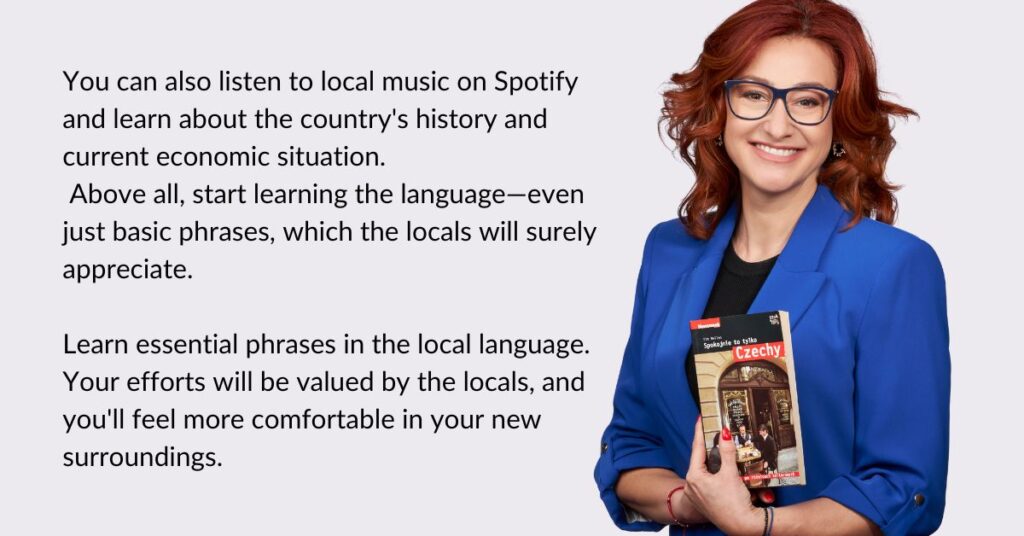
Listen to local playlists, try regional delicacies, and most importantly—learn basic phrases in the local language. Your efforts to communicate will be appreciated, even if they’re not always met with enthusiasm.
Cultural Differences in the Workplace: What to Expect?
A temporary stay abroad is not a vacation. At first, you may be treated like a tourist, but over time, as you establish routines, you’ll begin to feel more integrated.
Work Culture Varies by Country
Each country has its own work culture, even among close neighbors. In some places, precision, punctuality, and structured processes are highly valued, such as in the Czech Republic. Meanwhile, cultures like France emphasize flexibility and adaptability. Even attitudes toward lateness differ—while being a few minutes late in Japan requires an apology, in Latin American countries, slight delays are often tolerated.
Hierarchy and Communication Styles
Workplace hierarchy and decision-making approaches also vary. In some companies, top executives make all key decisions, while in Scandinavian countries, employee participation is more common. In Japan, feedback is given subtly to maintain harmony, whereas in France, open and passionate discussions are the norm. Czech professionals may avoid direct confrontation, preferring indirect communication or silence over direct criticism.
Motivation in Different Work Cultures
Motivation strategies are not one-size-fits-all. In individualistic cultures like the U.S., competition and financial incentives drive performance. In Scandinavia, teamwork and a sense of community are key, with a strong emphasis on trust. Meanwhile, in Slovakia, personal relationships and loyalty to leadership often play a more significant role. Even small office rituals, such as greetings or business card exchanges, can shape workplace relationships.
Overcoming Cultural Differences in the Workplace
Dutch sociologist Geert Hofstede conducted extensive research on national cultures, analyzing factors such as power distance, individualism vs. collectivism, and approaches to uncertainty. While his findings remain relevant, globalization and migration continue to reshape workplace dynamics.
Below is an example of Hofstede’s six dimensions comparing the Czech Republic, Japan, Norway, and Poland. However, these differences should be interpreted with caution.
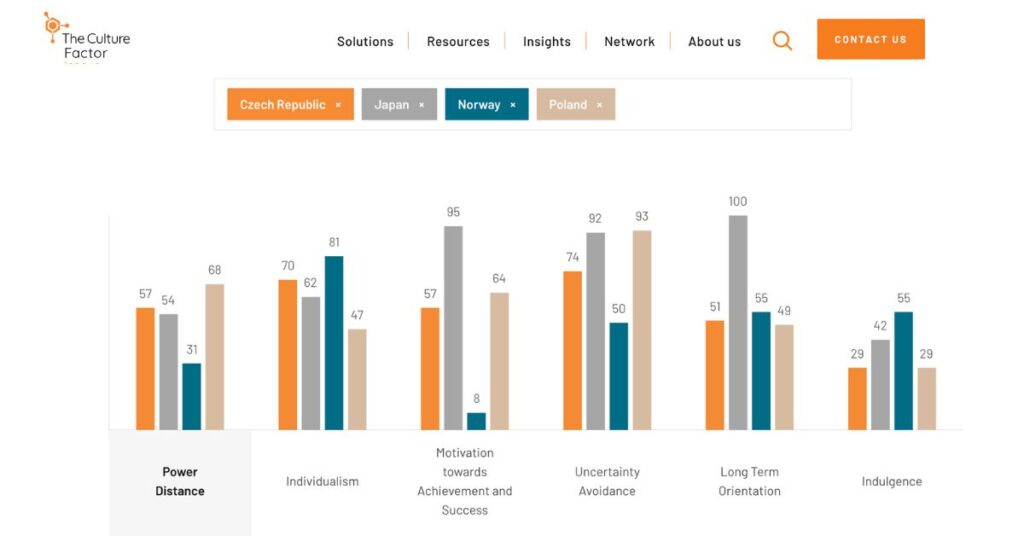
źródło: https://www.theculturefactor.com/country-comparison-tool
Cultural differences don’t need to be overcome—they need to be understood and embraced.
Key Takeaways: How to Adapt to a New Culture?
The best approach to adapting abroad is to stay humble and curious. Preparation is essential, but so is an open-minded attitude. It’s important to acknowledge that you may not know everything and to embrace learning opportunities. Ask questions, listen, and observe. You may not agree with every cultural difference, but understanding and respecting local customs will help you integrate more smoothly.
Living in a new country brings both positive experiences and challenges. The most valuable lessons come when we approach them with an open heart and a willingness to adapt.
My personal advice? take the leap! 😊 Give it a try—after all, what’s the worst that can happen? You can always come back. 😉