Employer branding must extend beyond youth-centric narratives. If we aim to promote diversity, we must also showcase it and invite all generations to co-create the employer brand.
Generations Seek Recognition — Not Just Employment
As of 2024, individuals aged 50–64 account for about one in four workers in many developed countries, while the number of workers under 30 continues to decline. That is why, in this reality, employer branding must reflect all generations, not just the youngest.
Who you feature in your employer brand is who you recognize.
And those left out? As result they may feel invisible.Employer branding trends don’t appear by chance — they emerge as a direct result of who we choose to highlight, invite, and elevate in our communication.
Employer Branding as a Form of Appreciation for all generations
Employer branding isn’t just about recruitment marketing — it’s a clear message about who matters in your organization.
For many employees — especially Gen X and Baby Boomers — being seen and acknowledged publicly (in photos, quotes, videos, or testimonials) is a powerful form of recognition. These stories build pride and trust — both internally and externally. That is why, employer branding can be a great tool for recognizion, empowering the inclusive culture.
Real-Life Examples of Age-Inclusive Employer Branding
Here are global examples of companies walking the talk when it comes to generational diversity:
- B&Q (UK):
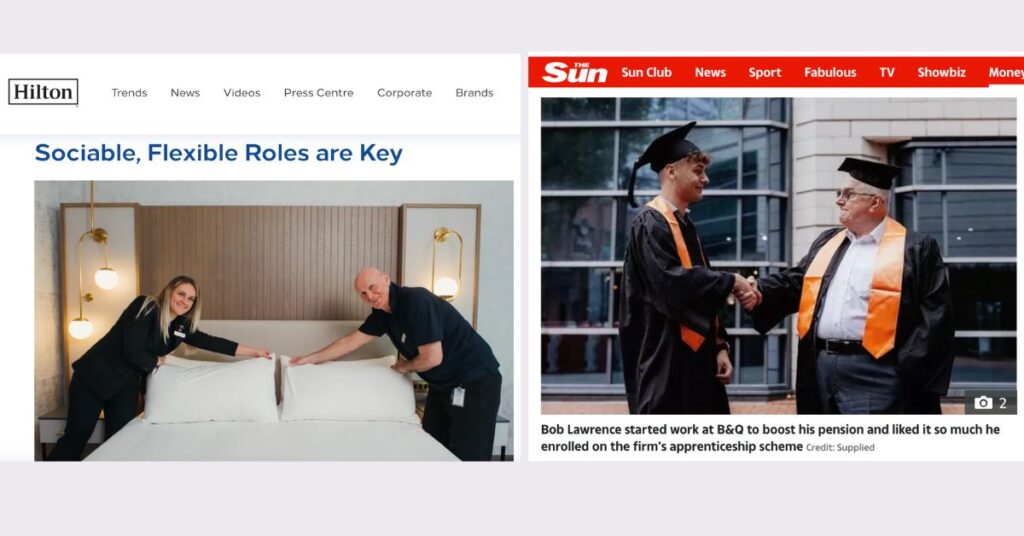
actively promotes age diversity within its workforce. As of 2023, over 35% of B&Q’s employees were over 50 years old, including 55 colleagues aged over 80. The company offers equal opportunities for learning and development to all employees, regardless of age. Notably, Bob Lawrence, a 72-year-old employee at B&Q Buxton, completed a Level 2 apprenticeship, exemplifying the company’s commitment to lifelong learning. - Hilton (Global):
Hilton has initiated recruitment drives specifically aimed at individuals over 50 years old. In 2024, the company announced plans to fill nearly 400 job vacancies across the UK, focusing on attracting over-50s seeking career changes. The idea was a result of a research conducted earlier, which revealed that 73% of over-50s were considering changing their working patterns to facilitate travel plans, with 34% citing burnout from office-based roles as a key driver. Hilton’s efforts underscore the value of experience and the importance of intergenerational collaboration in the workplace. - EasyJet (UK):
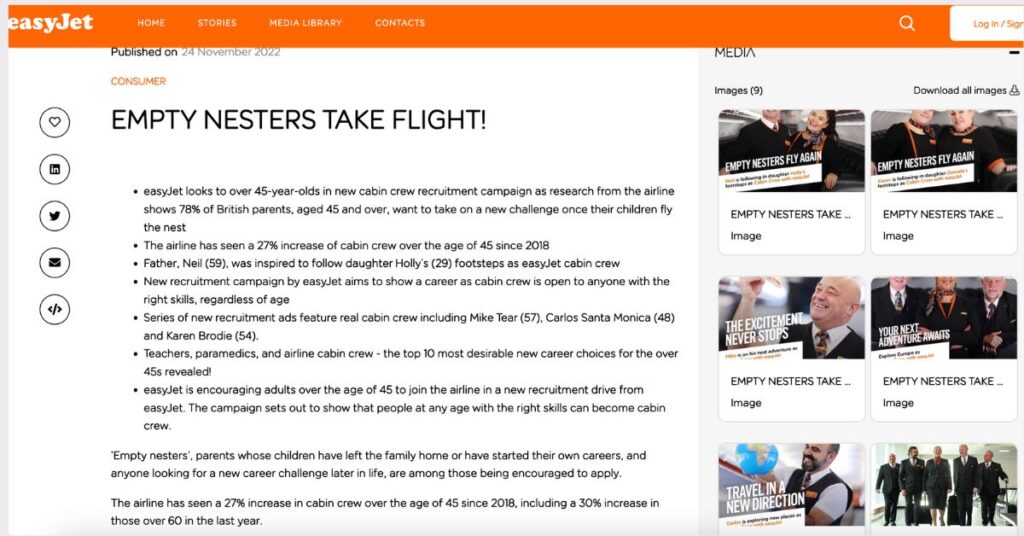
In the “Empty Nesters Take Flight” campaign, EasyJet specifically invited people aged 45+ to apply for cabin crew roles. As a result the number of staff aged 60+ grew by 30% in a year — proof that life experience is an asset in frontline roles. - IKEA (Poland):
IKEA’s campaigns show real employees of various ages. 50% of their managers are women, and their development programs are open to all ages — supporting both reskilling and internal mobility. - Barclays (UK):
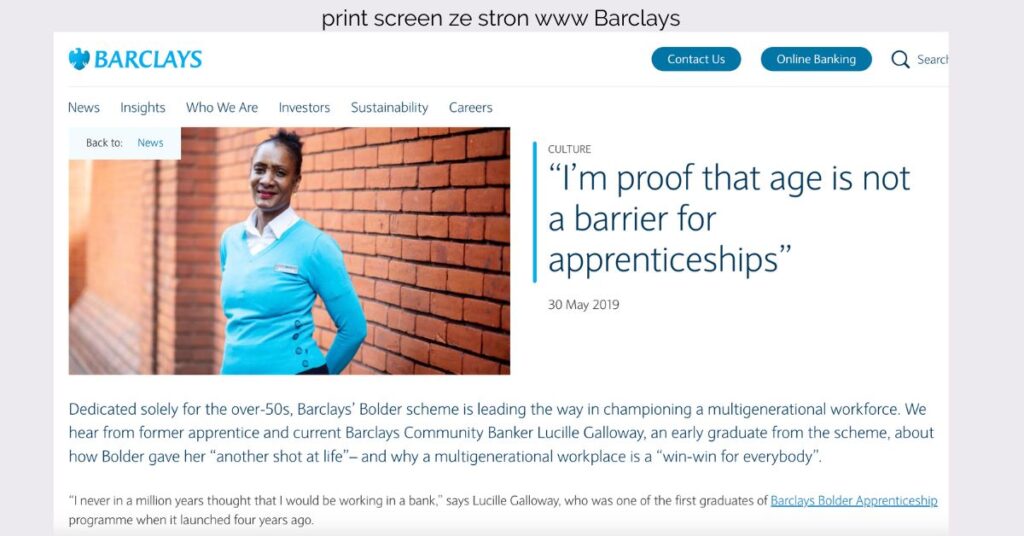
Their “Bolder Apprenticeship” program is open to anyone 24+ — including career changers over 50. In two years, over 660 people have joined.
Recruitment: The First Act of Inclusion
The way we recruit is often the first real experience someone has with our employer brand. And it sends a message: “People like you are welcome here.” Or not.
Do you want to create employer branding for all generations? here are some questions for HR and EB Leaders
Use these to assess your team’s maturity in age inclusion:
- Are employees over 50 visible in our campaigns, career site, and employee stories?
- Do our employee advocacy or ambassador programs include people from multiple generations?
- Would a 25-year-old and a 55-year-old both feel invited to apply after reading our job post?
- Do we talk about intergenerational learning — and actually encourage it?
- Have we trained hiring managers to spot — and question — age bias?
Conclusion: A Brand That Reflects Real People
Consider, that if you only show one generation, you can miss the power of all others.
Employer branding isn’t just about “attracting talent”; it’s about saying: “This is who we are. This is who belongs here.”
To create a credible and inclusive employer brand, make sure people of every age can see themselves in it — and feel seen.
sources:
https://mediacentre.easyjet.com/story/15624/empty-nesters-take-flight
https://www.thesun.co.uk/money/30695456/how-to-unretire-train-young-staff